
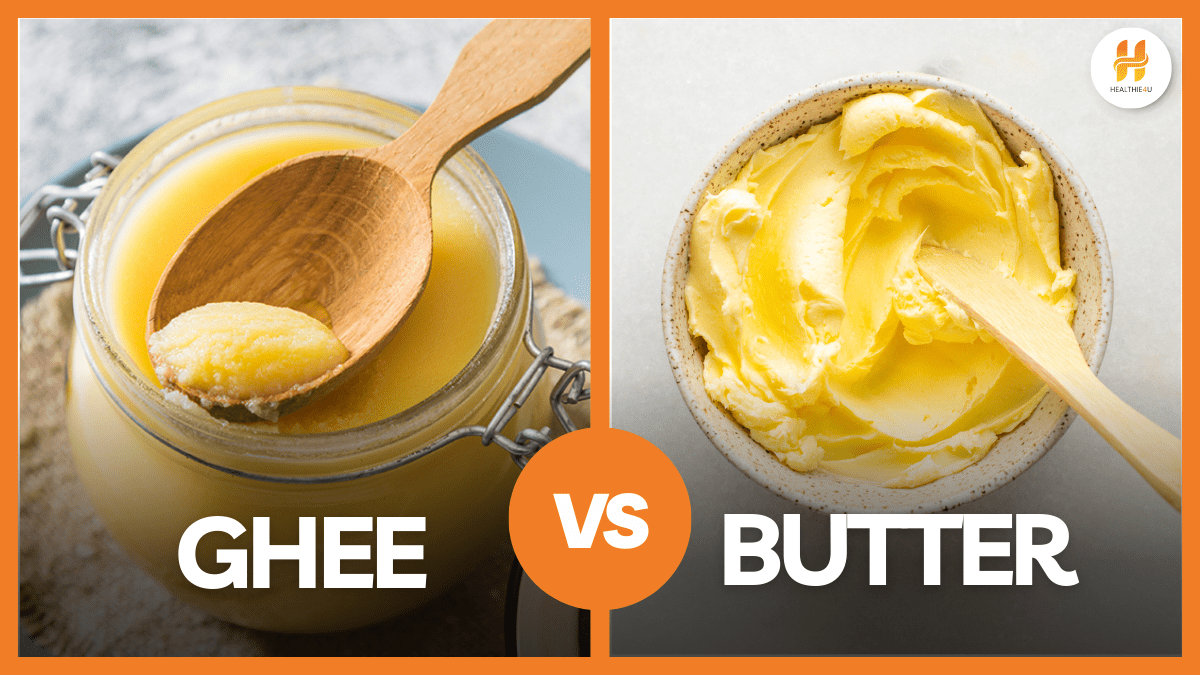
Butter VS ghee—what should you actually eat?
When deciding between butter vs ghee, it’s important to understand their nutritional differences, health impacts, and ideal uses. Both are fats derived from dairy, but they differ in how they’re processed and how they affect your body. Below is a research-based comparison to help you make an informed choice.
What Are Butter and Ghee?
- Butter is made by churning cream to separate the butterfat from the buttermilk. It contains about 80% fat, along with water and milk solids.
- Ghee is clarified butter—butter that has been simmered to remove water and milk solids, resulting in pure butterfat. It’s commonly used in Indian cooking and traditional medicine (Ayurveda).
Nutritional Comparison (per tablespoon) Butter vs Ghee
| Nutrient | Butter | Ghee |
| Calories | ~102 kcal | ~112 kcal |
| Total Fat | 11.5 g | 12.7 g |
| Saturated Fat | 7.2 g | 7.9 g |
| Cholesterol | 31 mg | 33 mg |
| Carbs / Protein | Minimal | None |
| Lactose / Casein | Present | Removed |
Sources: USDA Food Database, Journal of Food Science and Technology (2014), Nutrients Journal (2018)
Key Differences – Butter vs Ghee
Factor |
Butter |
Ghee |
| Lactose | Contains lactose & casein | Lactose & casein removed |
| Smoke Point | ~300°F (150°C) | ~485°F (250°C) |
| Shelf Life | Refrigeration needed | No fridge needed |
| Taste | Creamy, slightly sweet | Nutty, aromatic |
| Culinary Use | Spreads, baking, sautéing (low heat) | Frying, sautéing, traditional dishes |
Health Effects Based on Research- Butter vs Ghee
Potential Health Benefits of Ghee:
- Better for Lactose-Intolerant People
Ghee has negligible amounts of lactose and casein, making it safer for those with intolerance.
- Rich in Butyrate
Butyrate is a short-chain fatty acid linked to anti-inflammatory effects, improved gut health, and possible insulin sensitivity.
- High Smoke Point
Ghee is more stable at high temperatures, producing fewer harmful compounds during cooking.
- Ayurvedic Uses
Traditional systems suggest ghee supports digestion, brain function, and acts as a carrier for fat-soluble vitamins.
Potential Health Benefits of Butter:
- Rich in Fat-Soluble Vitamins
Butter provides vitamins A, D, E, and K2, especially when made from grass-fed cows.
- Supports Brain and Hormone Health
Saturated fats and cholesterol in butter help maintain cell membranes, support hormone production, and aid brain function.
- Contains Conjugated Linoleic Acid (CLA)
CLA is a naturally occurring fatty acid in butter with anti-inflammatory, fat-burning, and immune-supporting properties (more potent in grass-fed butter).
- May Not Harm Heart Health (in Moderation)
Recent studies show that moderate butter intake does not significantly increase heart disease risk, and may even protect against type 2 diabetes.
- Enhances Nutrient Absorption
Butter helps absorb fat-soluble nutrients like beta-carotene and vitamins A, D, E, and K from other foods.
Concerns About Both Butter and Ghee
- High in Saturated Fat
Both are about 60%+ saturated fat, which can raise LDL (“bad”) cholesterol. Excess intake is linked to heart disease - Calorically Dense
Easy to over consume; moderation is key.
Which One Should You Eat? – Butter vs Ghee
Choose Ghee if:
- You are lactose or casein intolerant
- You cook at high temperatures
- You prefer Ayurvedic or gut health-supportive options
- You want a longer-lasting fat
Choose Butter if:
- You want a creamy texture in baking or spreads
- You’re cooking at lower temperatures
- You consume dairy without issue and enjoy the taste
Bottom Line (Research Summary):
Butter vs Ghee
| Components | Summary |
| ✅ Ghee | Slightly better for high-heat cooking, gut health, and lactose-intolerant individuals. Offers unique compounds like butyrate. |
| ✅ Butter | Still fine in moderation. May be better for baking and general use where milk solids enhance flavor. |
| ⚠️ Both | Should be used in moderation due to saturated fat content. Choose based on dietary needs, cooking method, and health goals. |
Still confused about Butter vs ghee and what fits your health goals? Download the Healthie4U App to get personalized diet recommendations, meal plans, and weight-loss guidance based on your lifestyle and metabolism.
Eat smart, choose wisely—Healthie4U has your back.
Butter and ghee can impact liver health if overconsumed because both are high in saturated fat. Ghee supports gut and liver inflammation, while butter provides vitamin support—but moderation is key. For deeper insights, check “How Your Diet Can Harm or Heal Your Liver | Fatty Liver Explained”