
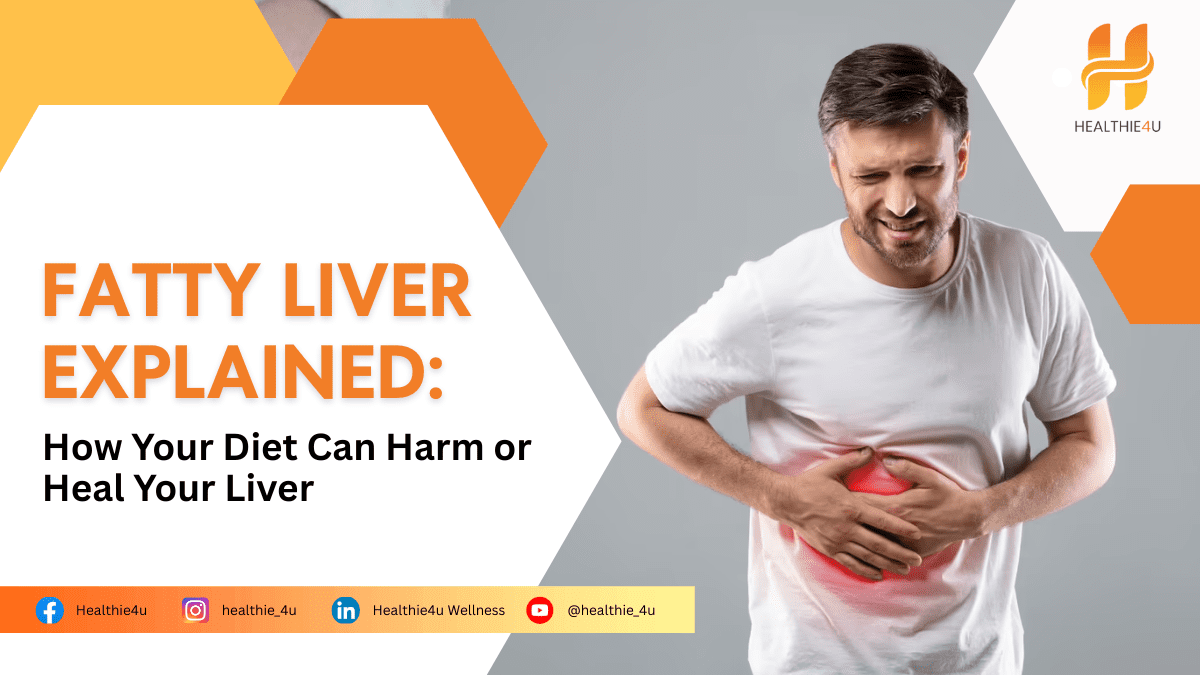
Fatty Liver Explained: How Your Diet Can Harm or Heal Your Liver

Fatty liver disease happens when extra fat builds up in your liver. A small amount of fat in the liver is normal, but too much can cause health problems over time.
There are two main types of fatty liver disease:
- Non-Alcoholic Fatty Liver Disease (NAFLD)- This is the most common type and happens in people who don’t drink much alcohol. It’s mostly linked to unhealthy eating, being overweight, not moving enough, and having conditions like diabetes or high cholesterol.
- Alcoholic Fatty Liver Disease (AFLD)- This type is caused by drinking too much alcohol, which damages liver cells and leads to fat buildup.
NAFLD is becoming more common these days, especially because of poor diets, fast food, sugary drinks, and less physical activity. The good news? Since it’s closely tied to lifestyle, it can often be improved or even reversed through healthy changes in diet and daily habits
How Your Diet Affects Fatty Liver
The food we eat has a big impact on our liver. If we eat too much unhealthy food, it can cause fat to build up in the liver over time. Here’s how certain eating habits can lead to fatty liver:
1. Too Many Calories and Sugar-
When we eat more calories than our body needs, especially from sugary drinks, white bread, and sweets, our body turns the extra sugar into fat. Some of that fat ends up in the liver, which can lead to fatty liver disease.
2. Too Much Fructose-
Fructose is a type of sugar found in soft drinks, candy, and even some fruit juices. When we eat a lot of it, the liver gets overloaded and starts storing more fat.
3. Unhealthy Fats-
Eating a lot of fried foods, fast food, and packaged snacks that contain trans fats or too much saturated fat can cause fat to collect in the liver, putting an extra overload.
4. Not Enough Fiber and Nutrients-
A diet low in fiber and rich in ultra-processed foods lacks the essential nutrients that support liver function, like vitamin E, choline, and antioxidants.
Symptoms: Often Hard to Notice
Fatty liver is sometimes called a “silent” disease because many people don’t feel sick or have clear symptoms in the early stages. But as the condition gets worse, some signs may start to show, such as:
- Feeling tired all the time
- A heavy or uncomfortable feeling on the upper right side of the belly
- Gaining weight easily or finding it hard to lose weight
- Higher liver enzyme levels in blood tests, which can be a sign that the liver is under stress
If not managed, fatty liver can become more serious. It can lead to inflammation in the liver (called NASH), liver scarring (fibrosis), and over time, even cirrhosis or liver cancer.
The Role of Nutrition in Fatty Liver Disease
The good news is that fatty liver can often be reversed, especially in the early stages, just by making better food and lifestyle choices. Just like unhealthy eating can cause liver problems, healthy eating can help heal it. Here are some key nutrition and lifestyle tips that really make a difference:
- Lose Weight Slowly and Safely- A weight loss of 5-10% of body weight can significantly reduce liver fat. Crash diets are discouraged, as rapid weight loss can worsen liver inflammation.
- Eat More Fiber and Plant-Based Foods- Fill your plate with vegetables, fruits, whole grains, beans, lentils, nuts, and seeds. These foods help lower liver fat, improve digestion, and give your body the nutrients it needs to heal.
- Cut Down on Sugar and Refined Carbs- Avoid foods like white bread, sugary drinks, pastries, and snacks made with white flour or added sugars. These raise blood sugar levels and increase fat buildup in the liver.
- Limit Saturated and Trans Fats- Avoid fried foods, processed snacks, and foods with trans fats or too much saturated fat.
- Watch Your Fructose Intake- Fructose, a sugar found in sodas, candies, and even fruit juices, is metabolized mainly by the liver. High fructose intake can overwhelm the liver, promoting fat buildup and inflammation.
- Drink Plenty of Water- Your liver needs water to flush out toxins. Try to drink at least 8- 10 glasses a day.
- Consider Helpful Supplements (only with medical advice)- Some people may benefit from certain supplements, but always check with a doctor first. These may include Vitamin E, Choline, Probiotics, etc.
Lifestyle Changes That Support a Healthy Liver
- Exercise regularly- Try to get at least 30 minutes of moderate activity, 5 days a week.
- Reduce stress- Stress affects hormones and liver function. Deep breathing, walking, or hobbies can help.
- Get good sleep- Aim for 7–8 hours per night. Poor sleep can make it harder to control weight, blood sugar, and liver health.
- Avoid alcohol- Alcohol puts extra stress on your liver and makes fatty liver worse. Even small amounts can damage a liver that already has fat buildup. Giving up alcohol helps your liver heal and reduces the risk of serious liver problems. It’s one of the most important steps to protect your liver health.
Fatty liver doesn’t have to get worse. With the right food choices, enough movement, and some self-care, you can give your liver the support it needs to heal and work well again. Small changes really do add up!
To follow a personalized Fatty Liver Disease Diet with expert-designed meal plans and daily food tracking, use the Healthie4U App — your smart companion for reversing fatty liver naturally. Download now and start your healing journey.
To learn more in detail about the Top 3 Reasons You’re Not Losing Weight — Nutrition Mistakes to Avoid, check out our full blog now.